

You Cannot Be Serious.
By Morgan Christen
CFA, CFP, CDFA
Dear hall
Unlike a certain tennis legend who turned arguing with a line judge into an art form, we are going to take a breath, lower our racket, and walk through why we should not overreact to recent market volatility. No drama. No storming the net. No pointing at a ball mark that may or may not have been on the line. Just the facts, a little context, and maybe…maybe one raised eyebrow where the situation warrants it.
Why: the markets will always give you reasons to throw your racket. Rate decisions, geopolitical noise, earnings surprises, that one commentator on CNBC who somehow gets airtime every single day. There will always be a call that looks wrong from where you’re standing. The question is whether you let it rattle your game or whether you towel off, walk back to the baseline, and play the next point. Like Ted Lasso said, “be a goldfish.”
Last month, we’ve got plenty of calls worth questioning. Advantage: Perspective.
The AI Trade: Fallen From Grace, Not From Earth
The AI trade has taken a beating. A real one. This isn’t a blip, and we’re not going to pretend otherwise. But before anyone flips a courtside chair, let’s look at the scoreboard. The Magnificent Seven, once the unquestioned kings of the equity court are nursing some significant year-to-date losses. Microsoft is down 22%. Meta, 12%. Tesla, 15%. Amazon and Nvidia, both off roughly 8%. Apple, 6%. Alphabet, 9%. That’s not noise. That’s a rotation, a repricing, and in some cases, a genuine reckoning.
There are reasons. Rising yields have quietly done what rising yields always do, compressed the valuations of companies whose earnings are heavily weighted toward the future. Add in profit-taking after a historic run, concerns about the sheer scale of AI capital expenditure relative to near-term revenue, and a tech sector that can no longer claim its old role as the market’s safe harbor and you have the conditions for exactly this kind of pullback.
There’s also a newer wrinkle worth watching: the Gulf monarchies. The assumption that sovereign wealth from the Middle East would flow steadily into American AI infrastructure is getting a second look, as these nations signal increasing interest in building their own capabilities rather than simply bankrolling someone else’s. Eye on the ball.
The Wildcard Nobody Priced In
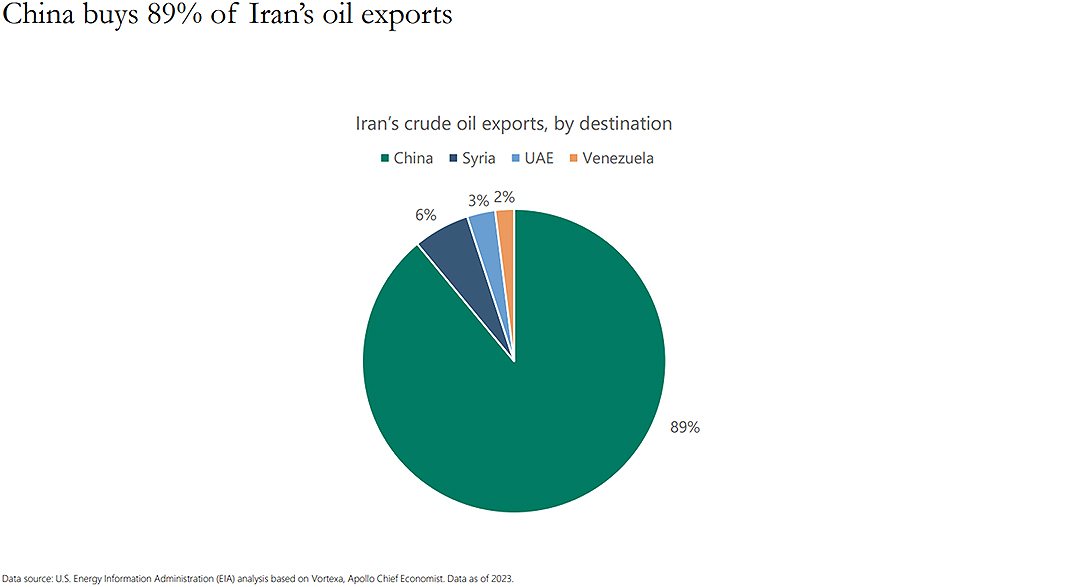
If rising yields and AI spending concerns were the volleys that put the market on its heels, the war in Iran is the serve nobody saw coming. And yet here we are.
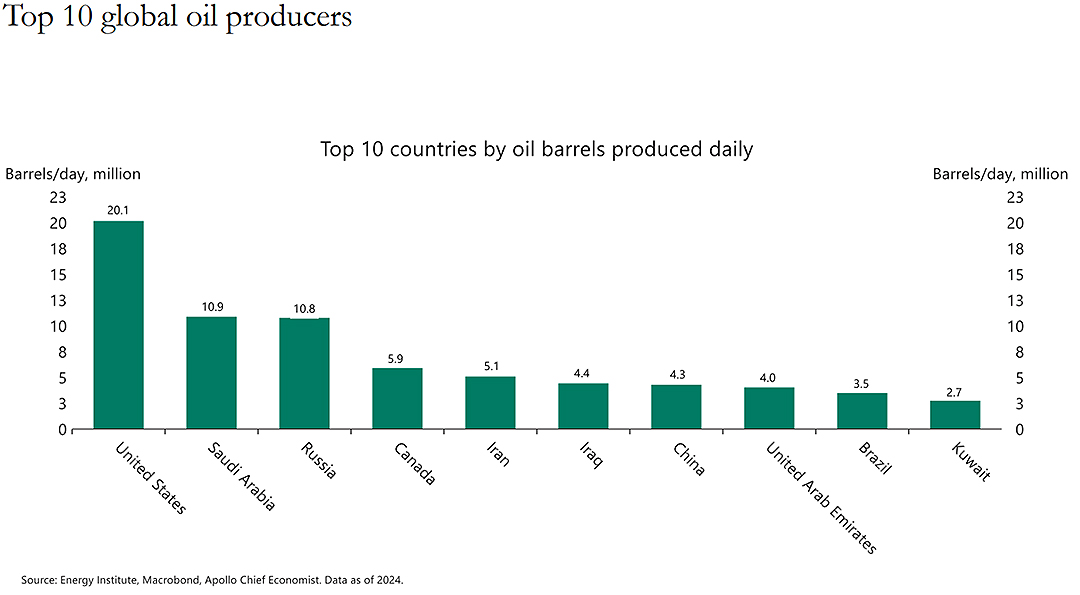
Every conflict carries economic disruption. But Iran’s strategy isn’t conventional. Tehran isn’t simply absorbing American airpower and hoping for a ceasefire. It’s playing a longer, more deliberate game, one aimed squarely at the jugular of the global economy: energy flows.
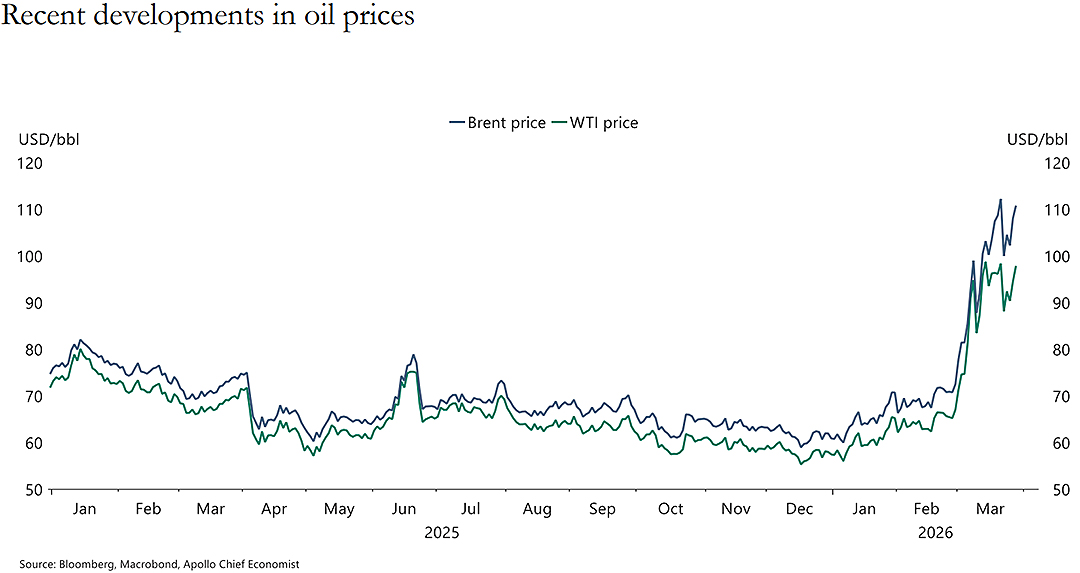
Washington envisioned something swift. A targeted campaign, a quick resolution, a return to order. Tehran had other plans. The result is a protracted oil war that has wrong-footed the administration, rattled global markets, and resurrected a word that nobody in finance wanted to hear again…stagflation. Investors are waiting for Trump to TACO, but this is not like tariffs. In war, the enemy has a say.
The honest assessment? It’s far from over. The path to resolution runs through two capitols with very different timelines and very different definitions of winning.
Investors are parsing every word from the White House, every statement, every signal, every Tweet, every Truth Social, every carefully worded non-answer from a press briefing. That’s understandable. But it’s also a reminder that markets driven by geopolitical headline risk are markets operating outside their comfort zone. We watch. We don’t overreact. We don’t assume the worst.
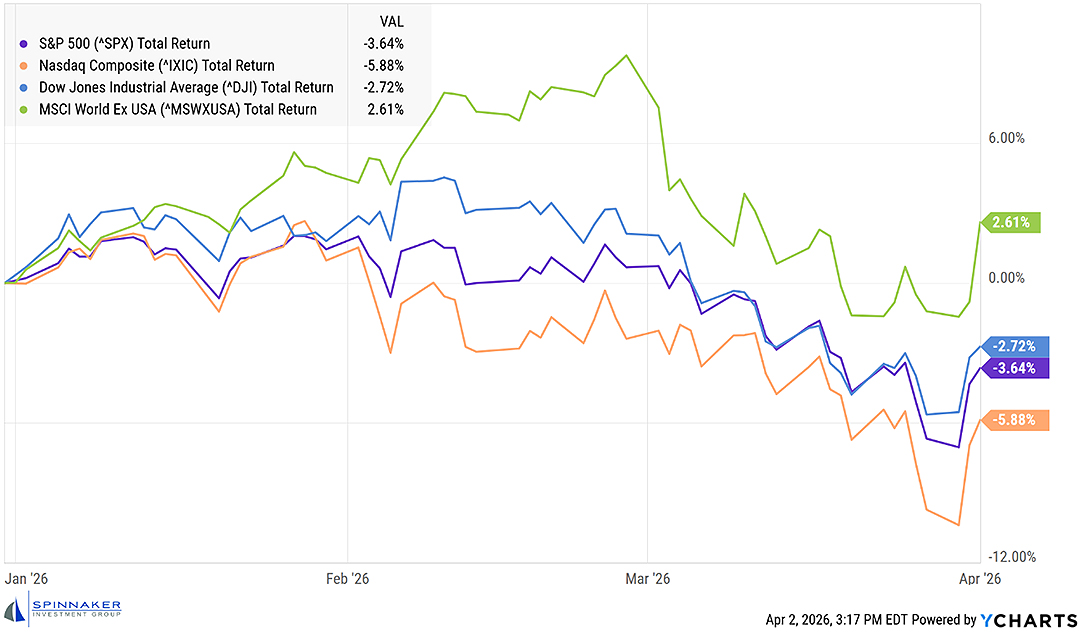
Let’s dive into markets. The chart on the major indices tells the story.
Through the first quarter of 2026, we had a divergence between American and international equities.
The numbers as of the end of the quarter: the S&P 500 down 3.64%. The Nasdaq, the home of everything AI and high-multiple, down 5.88%. The Dow, a touch more insulated by its value-tilted composition, off 2.72%. The MSCI World Ex-USA international developed markets, the asset class that spent much of the last decade being dismissed at cocktail parties, is sitting at a positive 2.61% total return. That’s a meaningful, real-world gap between staying home and looking abroad.
The rotation out of concentrated U.S. tech exposure and into international diversification didn’t announce itself with a yell.
And those who were positioned for it are having a very different first quarter than those who weren’t. Diversification worked. Not as a theory as an outcome. The case for international exposure wasn’t just academic this quarter.
The Nasdaq’s underperformance relative to even the broader S&P says everything about where the pain has been concentrated. This is a high-multiple, high-expectation drawdown. The stocks that needed the most to go right have had the most go wrong.
And the sharp late quarter drop visible across all three U.S. indices is not just geopolitical noise. It is the market repricing a set of assumptions about Fed policy, about energy stability, about the durability of the AI spending cycle that had been baked in since last year. Lost in the third set.
Bond Market: The Fed Likes Big “Buts”
There is an art to saying a great deal while committing to very little. Jerome Powell has mastered it. At the March 18th press conference, the Chair offered what might be remembered as the “Big Buts” presser a masterclass in institutional hedging delivered with a straight face and a steady voice.
But the implications of events in the Middle East for the U.S. economy are uncertain.
But we’ll be making progress on inflation. Not as much as we had hoped, but some.
But the U.S. economy is doing pretty well. It’s just… we don’t know what the effects of this will be. And really, no one does.
To be fair to Powell that last line is the most honest thing a Fed Chair has said at a podium in years. No one does know. And in a strange way, that candor is more useful to markets than false precision would be. Step back to January. The Fed had paused its rate-cutting cycle, but the mood was relatively constructive, consumer spending was holding, unemployment was stable, and the next cut felt like a matter of when, not if. The base case was a gentle glide path toward normalization.
Then February 28th arrived, and with it, the war.
What followed was a rapid and uncomfortable repricing across the entire fixed income market. Global bond yields moved sharply higher as investors began reflecting a new reality: an oil shock layered on top of inflation that was already running above the Fed’s 2% target not for a quarter, not for a year, but for five consecutive years.
As Tommy Norris (played by Billy Bob Thornton) explains in Landman, “you want oil to live above $60, but below $90, if gas gets up over $3.50 a gallon, it starts to pinch.” If it’s $100, every product in America has to readjust its price. Seventy-eight dollars a barrel, that’s about perfect.”
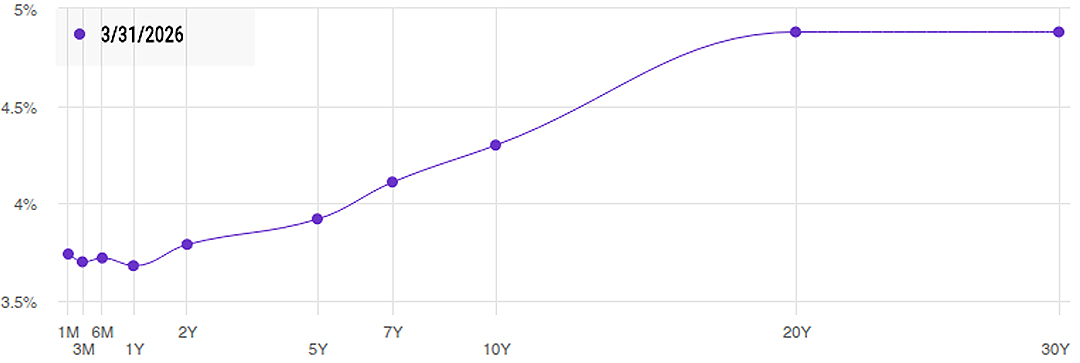
The two-year Treasury, Wall Street’s most reliable barometer for where the federal funds rate is headed, tells the story. Before the war it sat at 3.4%. By March 27th it had touched 4.0%. It currently sits at 3.8%. The federal funds rate range is 3.5% to 3.75%. The bond market, in other words, has already done what the Fed has not yet done, it has priced in a hike.
The Fed’s traditional playbook on oil shocks is well established: look through them. Treat the inflation as transitory, supply-driven, and not responsive to monetary tightening. Don’t choke the economy to fight a price spike you can’t drill your way out of. Powell acknowledged that instinct explicitly. But he also acknowledged the problem with applying it this time: you can argue for looking through an oil shock when your inflation credibility is intact. After five years above target, that credibility is thinner than the Fed would like to admit.
The result is an institution caught between two unpleasant options, tighten into a slowing economy and risk a hard landing, or hold and risk entrenching inflation expectations that are already fraying at the edges.
Wall Street is no longer asking when the next cut is coming. It is bracing for an extended pause at best, and beginning to seriously price in a hike. That is a remarkable reversal from where we sat ninety days ago.
We said it at the top: no drama. But we won’t pretend this isn’t a genuinely difficult moment for monetary policy. The Fed is navigating without a clean map, in conditions it did not anticipate, with a credibility account that has been running a deficit for years.
Looking Ahead: Best Of Five for the Next Quarter
1. May is rapidly approaching, how will the Powell era end? The Fed Chair’s term has become inseparable from the most complicated inflation environment in a generation. Whether he exits on his own terms or under pressure, the transition and the signal it sends about Fed independence matters enormously.
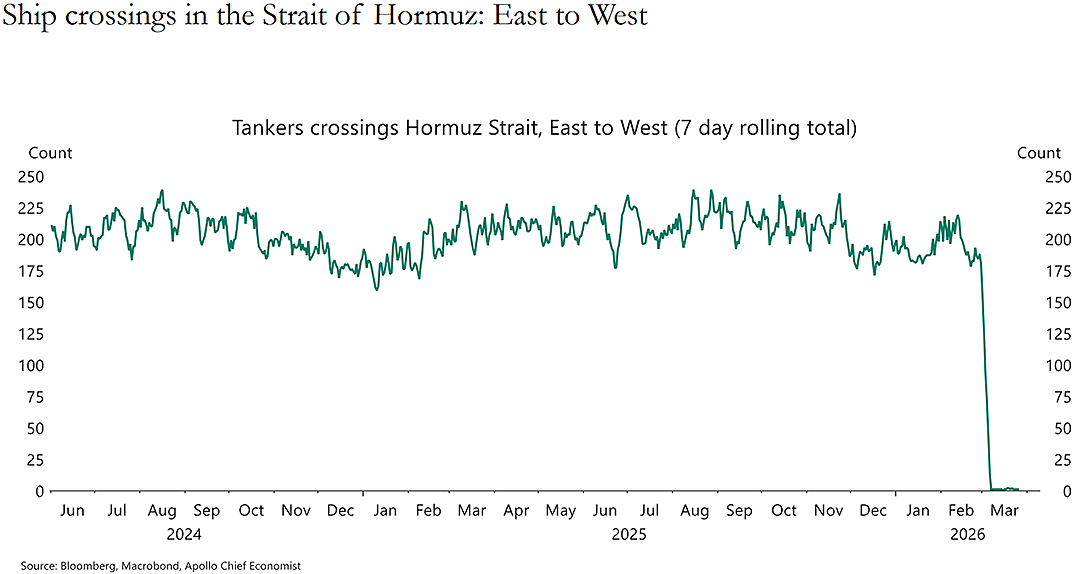
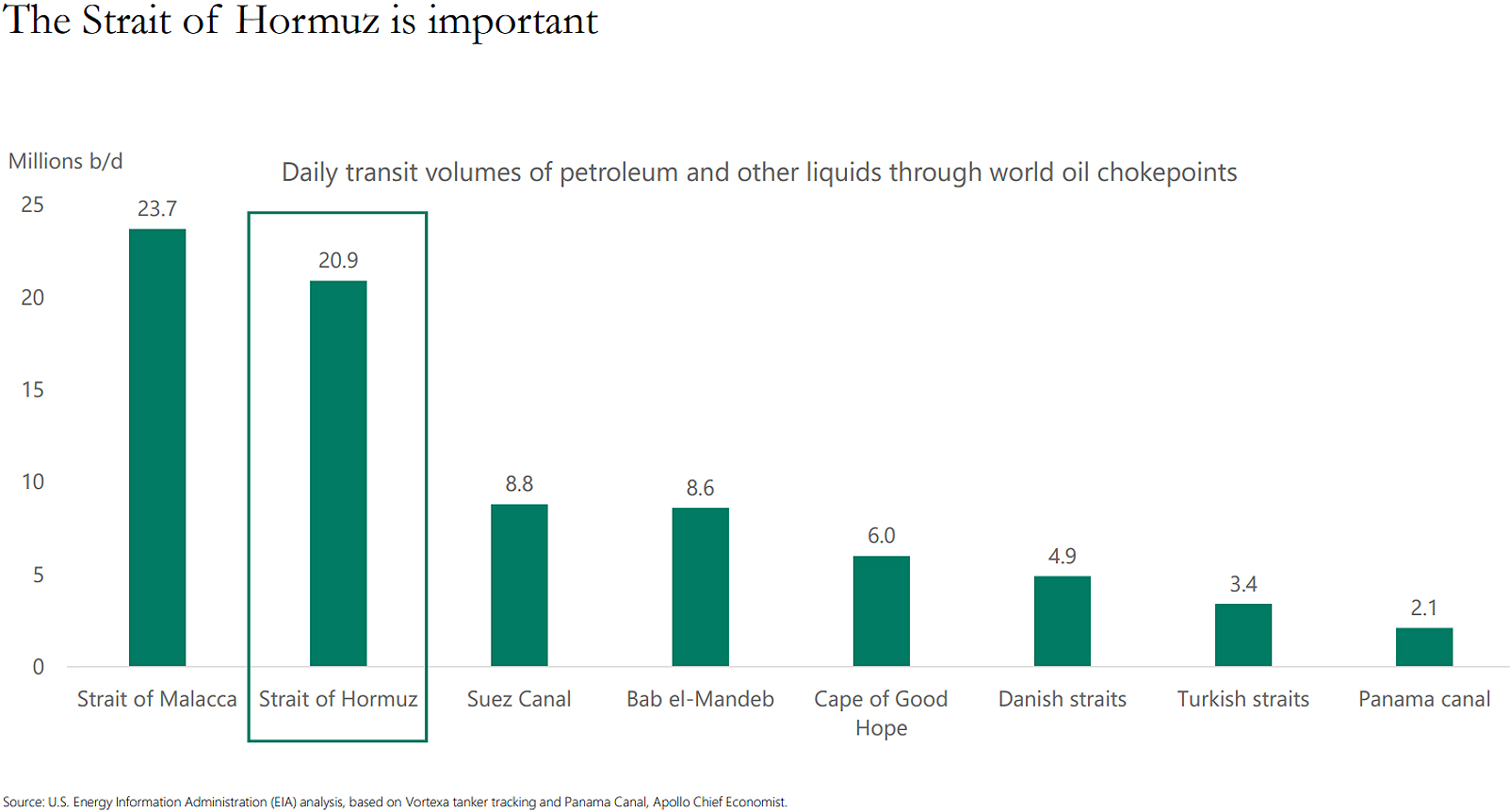
2. How will Wall Street treat the Iran War? Markets rallied on Tuesday’s headlines. But the deeper question is whether a ceasefire, when it comes, gets priced as a full reset or merely a relief. Oil infrastructure damage, supply chain disruption, potential for Iran to control the Strait of Hormuz (extracting tolls?) and shaken confidence in Middle East stability will not be resolved with a press release or tweet.
3. Where will investors land with AI spending, stay or go? The spending is real. The revenue validation is still catching up. At some point those two lines have to meet the question is whether investors remain patient enough to wait for the crossing.
4. Will video kill the radio star? Will AI kill software or enhance it? This is the most underappreciated fault line in the tech sector right now. Productivity gains from AI could lift software earnings or commoditize them entirely. The answer won’t be uniform across the sector.
5. Raise one, raise none, or hike? The bond market has already voted. The Fed hasn’t. The gap between those two positions is where much of the market’s anxiety lives right now.
We interrupt our normal programming to bring you a quick discussion on Jobs and AI
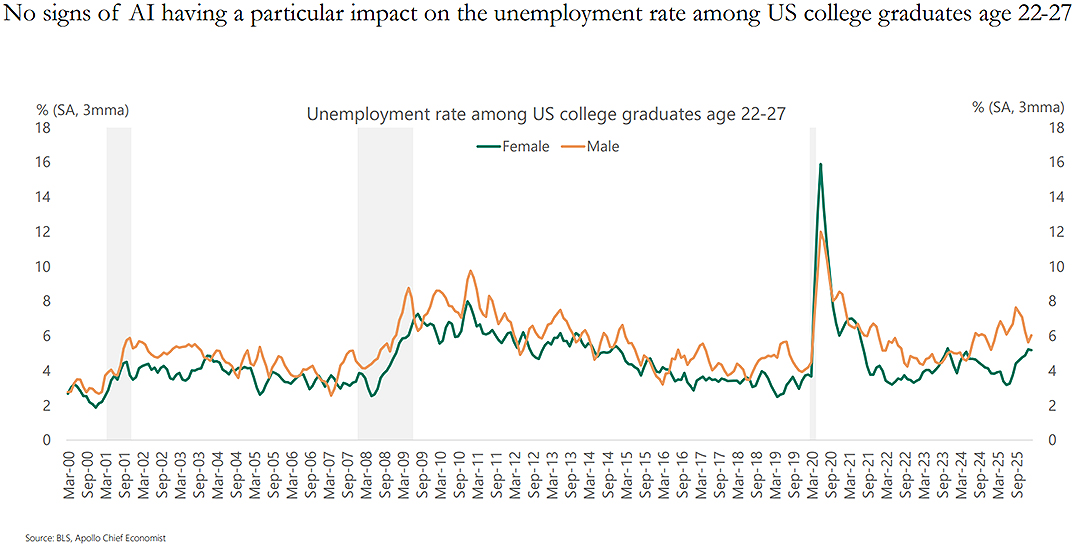
Apollo’s Chief Economist put out a chart this week tracking unemployment among U.S. college graduates aged 22 to 27, broken out by gender, going all the way back to March 2000. It’s one of the more quietly reassuring data points we’ve seen in a while.
The headline: no signs of AI having a particular impact on youth unemployment among college graduates.
We are now several years into one of the most dramatic technological shifts in modern economic history. The discourse around AI and job displacement has been, at times, genuinely apocalyptic white-collar jobs automated away, entry level positions evaporating, the career ladder pulled up just as a new generation tries to grab the bottom rung. The data, at least through late 2025, does not support that narrative.
Unemployment for this cohort is running in the 4–6% range for men and a touch lower for women well within the historical band that characterized the healthy labor markets of the mid-2010s. There is no visible inflection point coinciding with the mass adoption of generative AI tools. No structural break. No alarming drift upward. The labor market, for now, is holding the line
The Historical Case for Staying Calm
Time for some abdominal breathing, not McEnroe-ing.
Across 19 market corrections going back to 1980, the one-year forward return after the trough has been positive in 15 of them. A 79% win rate. An average return of +17%. A median of +22% The exceptions 1990, 2001, 2007, 2022 share a common thread: they were corrections that became something structurally larger. Recessions. Credit crises. Prolonged Fed tightening cycles. The current moment carries some of those echoes, which is why we won’t paper over the risks with cheap optimism.
But here’s what the number tells you: the majority of corrections, even scary ones, even ones with headlines that made you want to smash your racket and yell at the line judge rewarded the investor who stayed in their stance.
As investors, we invest in companies, not economies and headline risk is not the same as bottom-line risk.
Pullbacks have a win rate. Seventy-nine percent, in the past. That’s not a guarantee. But it is a reminder that the default posture – patient, diversified, eyes forward – has a better historical record than the alternative.
We could have more volatility and more crazy headlines. But we are also not in uncharted territory. Markets have navigated oil shocks, Fed uncertainty, geopolitical disruption, and technology repricing before. They came through. So did the investors who didn’t overreact. Stay in your stance.
We thank you for your continued trust and support as well as being an essential part of our journey. We would love your comments and look forward to speaking with you.
Now Live:
Spinnaker Market Alerts
We look forward to sharing breaking information with you, only when it matters. If you did not receive a text from us and you are interested in receiving Market Alerts, you can sign up by completing the form here.
Have You Taken
The SpinnCycle™?
A quick reality check for your portfolio
Enter the SpinnCycle and find your SpinnScore™
Spinnaker Mobile App now Available for iOS and Android


YOUR COMMENT